Snapshot, 1966 Kari (Marigold) Cadenhead
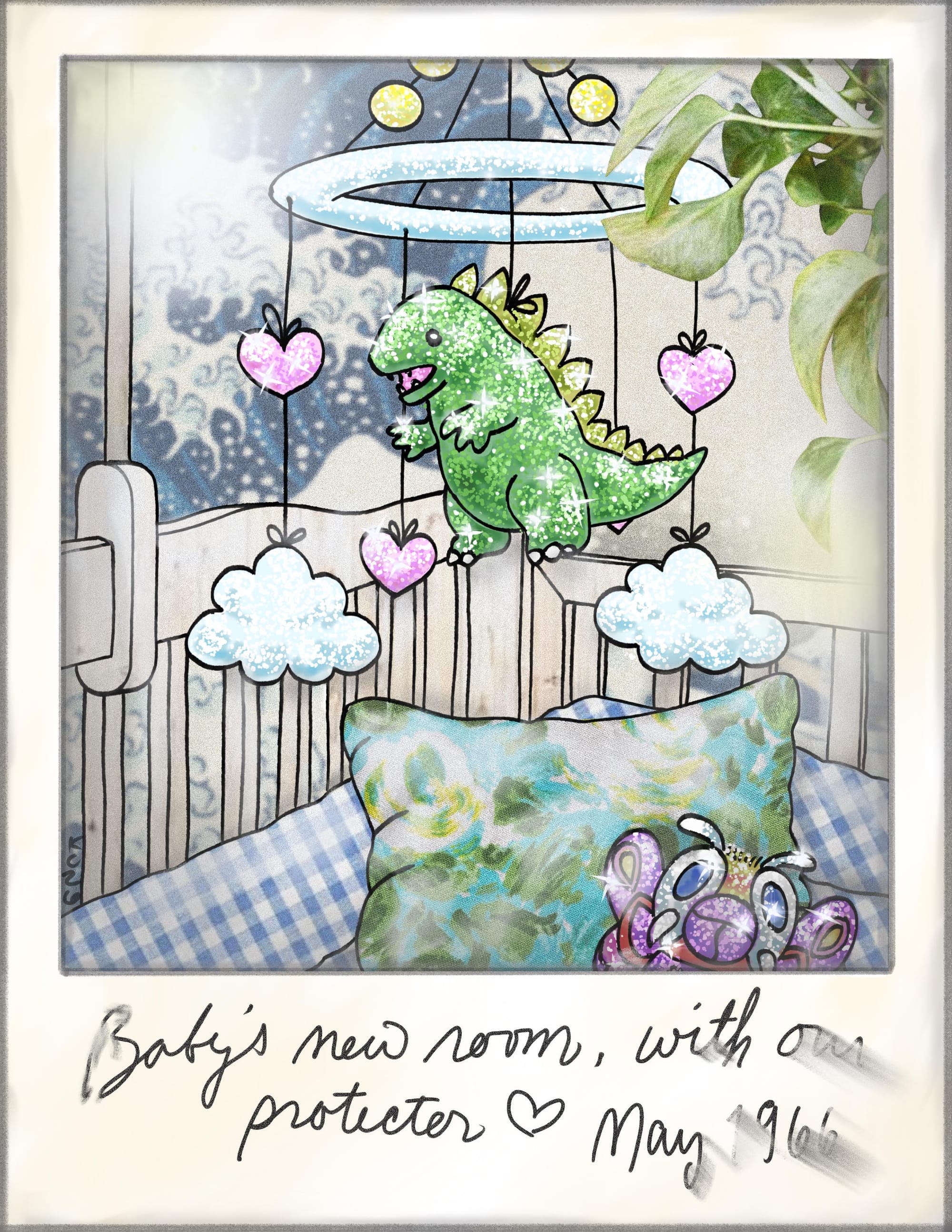
Imagining a past in which 1954's Godzilla had been released in an untouched and unbiased format.
New to the Mission? Visit TKP's About page or START HERE: Kaiju Papers Site Index
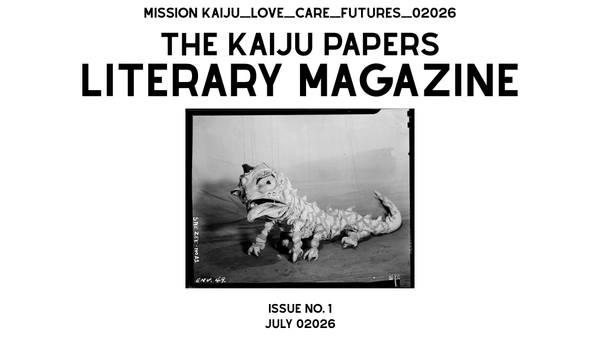
NOTE FROM MISSION HQ: We are pleased to present the third installment in the Kaiju Papers Arts Department's portfolio. Before you dive in, we have an update to share. Please refer to this memo shared with all Kaiju Papers Staff about the creation of The Kaiju Papers Literary Magazine. If you have questions or wish to support this effort, email thekaijupapers@gmail.com. If you have complaints, please refer them to Egg, our Administrative Assistant.
Snapshot, 1966 | Arts_Department_003
Kaiju_Love_Care_Futures_02026 | July 3, 02026
The mandate of the Kaiju Mission Arts Department is to create art that imagines what the future might look like if humankind were to implement some of the lessons and themes outlined in the Kaiju Mission Field Reports. These might be illustrations of the futures themselves, or imagined artifacts that exist in these futures.
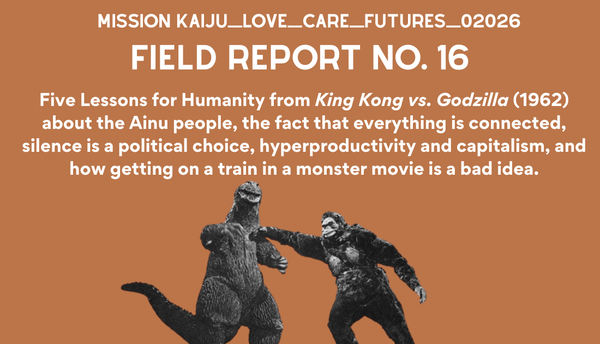
Kari's latest piece transports us to an alternate past and helps us imagine what reality might look like if humanity were to act on some of the lessons outlined in Kaiju Field Report No. 4, which offers three lessons for humanity from Godzilla: King of the Monsters (1956) regarding narrative power, the myth of apolitical decisions, and the risks of relying on one source of information.
Mission HQ would like to remind readers: imagining alternate pasts is a necessary piece of learning how we might build better futures. Time is a spiral, after all.
Snapshot, 1966
FROM THE ARTIST:
In my second illustration for the Kaiju Papers Arts Department, I explore the question in Kaiju Field Report #4,
“What might have happened if the original film (Godzilla, 1954) was shown in American theatres?... Where might we be if everyone had agency over how their stories are told?”
I departed from the project's future-telling and went directly back to the 1960’s, imagining a moment frozen in time, about a decade after the release of the original movie.
If Godzilla (1954) had been released in an untouched and unbiased format (if white Americans across the pond had been “ready” for it), it may have started a conversation about what a monster’s purpose is, beyond fear alone. I imagine it may have taught people something about how humans are affected by the decisions of anonymous men across the globe. The untouched story could have allowed them to gain respect for the monster figure as a valuable tool for passing on compassion and empathy.
Seeing Godzilla as more than a monster from the beginning could have led people to learn to love and respect him in new ways, and to integrate the symbol of his strength into the very core of living. This may have led families to teach children from a young age what he stands for and what the story teaches populations across the planet. This is signified in the illustration in the child's crib mobile: a soft, sparkly, cheerful representation of protection and lessons in humanity.
A note from the artist: Capitalism destroys any chance for the human spirit to grow. The story was changed to maximalize the monetary compensation of the American company releasing the film, and to keep the people with the most money—white people—happy and in theaters. Making them uncomfortable with the realities written into the original film would have brought down sales. But sometimes WE NEED TO BE UNCOMFORTABLE!!
ABOUT THE ARTIST:
Who are you?
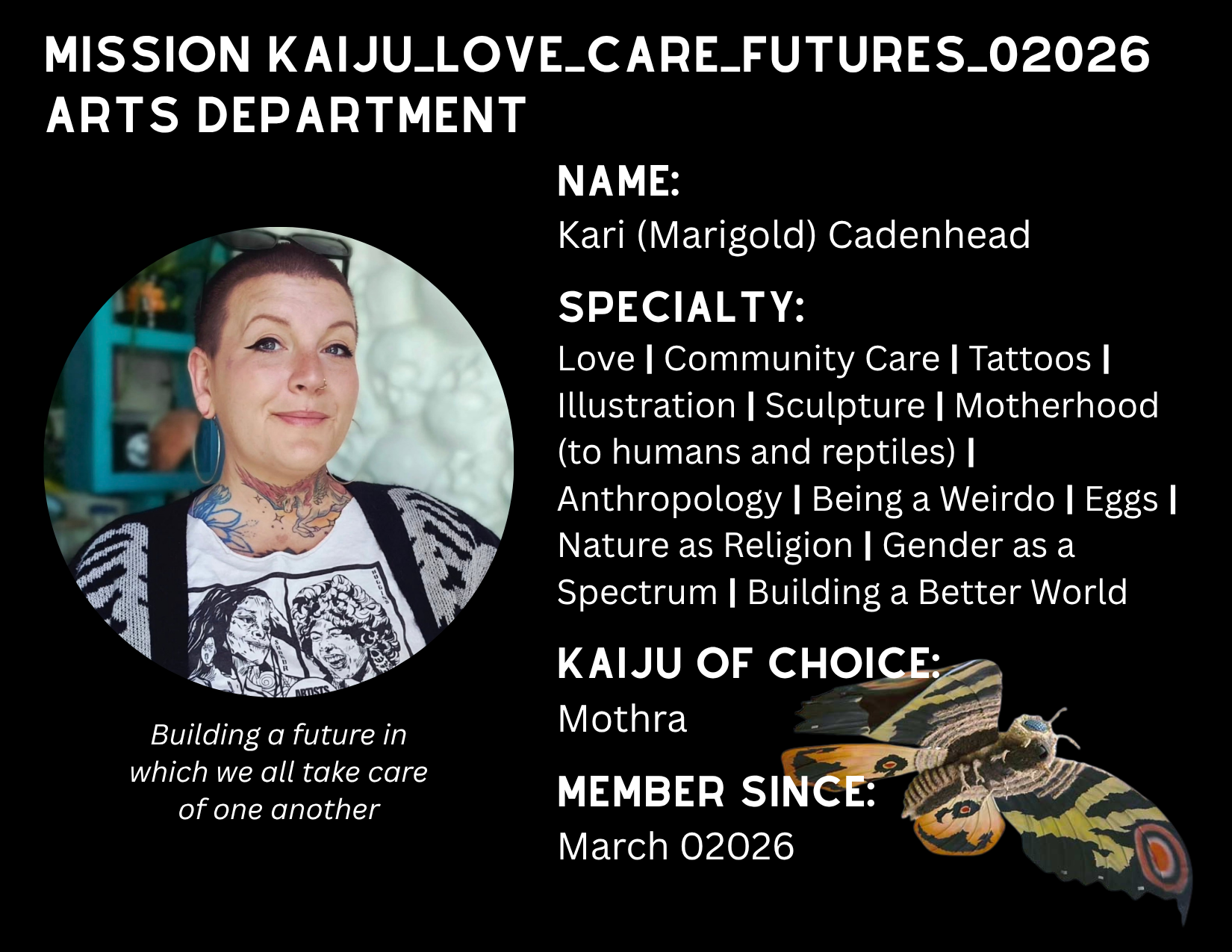
I am a multi-disciplinary artist, mother, and proud weirdo. I currently live in Tucson, Arizona, and work in arts administration while pursuing an Anthropology degree. Nature is my religion, I'm fluent in community care, and I consider myself an activist on several levels. I am a caretaker for many reptile (and reptile-adjacent) animals, so I feel the Godzilla Papers is an excellent project to be part of.
What has been your experience working on Mission Kaiju_Love_Care_Futures_02026?
So far, this has been a fun project to mull over while going about the daily grind of life in the present world. Imagining a future in which we all take care of one another is the only way to get there, and I'm very happy to be participating in that. I've already learned that I never do enough art.
Members of the public can access and support Kari’s work at the following links:
Instagram | Website | LinkedIn | Substack | Bluesky
WANT TO IMAGINE THE FUTURE(S) WITH US? JOIN THE KAIJU MISSION ARTS DEPARTMENT!
Access the Creative Brief at this link!
If you choose to accept the brief and wish to join the Arts Department, please let us know at thekaijupapers@gmail.com.